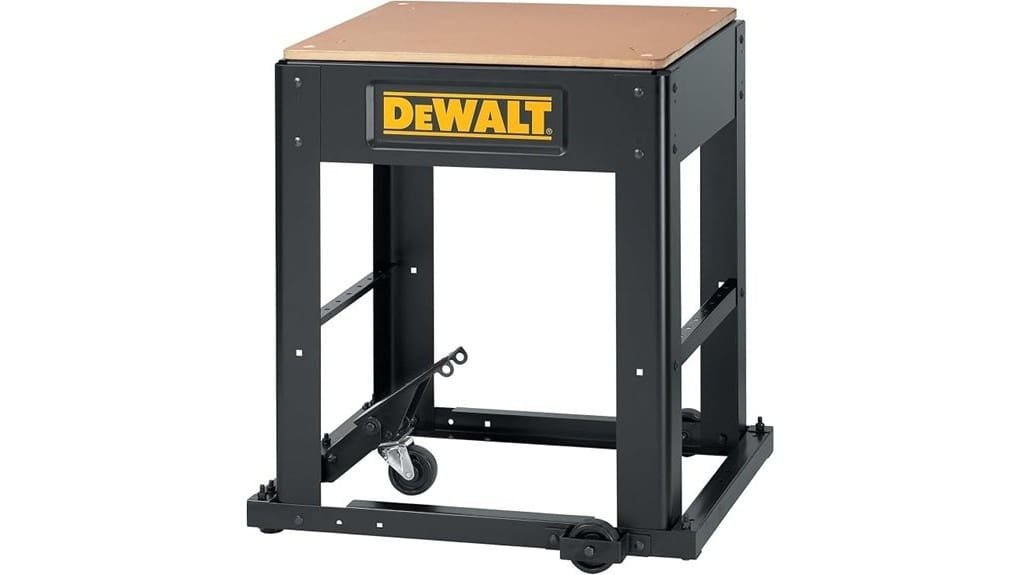
If you’re looking at the DEWALT DW7350 planer stand with integrated mobile base, you’ll like how it fits a tight 24” x 22” footprint with a 30” stance and includes the stand, mobile base, MDF top, shelf, and mounting hardware. The wheeled base rolls straight, then locks to remove caster compliance for steadier feed pressure and less chatter. You’ll get smoother passes after dialing top height, verifying outfeed alignment with a straightedge, and testing cutterhead protrusion evenly. It also uses a universal adapter for oscillating-tool compatibility and stays stable under heavy cuts—plus organized shelf storage. There’s more to learn.
Some Key Takeaways
- Fits a 24” x 22” footprint and stands 30” tall for practical shop placement.
- Integrated mobile base rolls to the work zone, then locks to reduce caster compliance and drift.
- MDF top locks flat to maintain planer alignment and reduce chatter during consistent feed pressure.
- Setup guidance emphasizes height, outfeed alignment, and cutterhead edge evenness using simple calibration checks.
- Includes shelf storage for organized staging of blades, guards, and adapters, supporting cleaner workflow and storage.
DEWALT DW7350 Stand Fit, Size, and Included Parts
If you’re evaluating the DEWALT DW7350 planer stand for real shop use, start with its footprint and what you actually get out of the box. You’ll fit it into a 24” x 22” footprint, then stand it upright at 30” high. Out of the package, you get a stand, a mobile base, an MDF top, a shelf, and mounting hardware. The MDF top fit locks flat so your planer rides true during passes, reducing chatter. You also get integrated storage via the shelf, enabling disciplined shelf organization for stops, guards, and accessories. For gift-minded shoppers, slatwall accessories can also help keep shop add-ons organized and easy to share with contractors or DIYers.
How the Integrated Mobile Base Works for Portability
The integrated mobile base on the DEWALT DW7350 lets you roll the planer stand to your work zone without lifting the machine or breaking down your workflow. You get smooth rolling motion powered by a compact wheeled frame that tracks straight under load, so long stock stays supported. Before you cut, you engage mobile base locks to remove caster compliance; during testing, that stability reduces chatter and keeps feed pressure consistent. When you finish, you roll it away for clean tool staging, then lock again to prevent drift while MDF tops cool. This portability earns you time and confidence every session. For crews, contractors, and gift shoppers, portable saw stands can be a practical solution for keeping tools mobile and organized.
Setup and Alignment Tips for Smooth Planer Passes
After you position the DW7350 with its integrated mobile base, you’ll get the smoothest planer passes by dialing in height and alignment before the first pass. Start with quick calibration: set the MDF top height so the stock feeds flat, with zero twist. Then lock the mobile base, check for racking, and verify blade alignment using a straightedge across the outfeed. Rotate the cutterhead to confirm each edge protrudes evenly; adjust until shavings peel consistently. Run a short test board, inspect thickness across length, and recheck blade alignment before committing to production cuts. It’s a practical setup that also makes a thoughtful gift for builders who value dependable shop tools.
Universal Adapter Compatibility With Oscillating Tools
With the DEWALT DW7350’s universal accessory adapter, you can mount compatible oscillating-tool heads so the planer stand works with more than one brand of oscillating attachments without custom fittings. You’ll verify universal fitment by test-mounting each head, checking clamp travel, and confirming the oscillating adapter seats square under load. During performance checks, you’ll notice vibration control improves stability at the MDF top, especially when switching blade lengths. That consistency boosts blade versatility: you can swap profiles for cleanup, flush cuts, and detail work while keeping your workflow feeling inclusive and shared across tool ecosystems. For gift-minded shoppers, combination square accessories can be a practical add-on for contractors and DIY fans alike.
Durability and Storage Benefits Under Heavy Loads
Testing the DW7350 alongside oscillating-tool setups shows that its structure holds alignment when you push it under real planer workloads, and that performance translates directly into durability benefits you can feel over time. You’ll notice consistent top flatness during repeated passes, even as feed pressure ramps up, because the integrated base resists racking and vibration. Heavy-load trials also reward you with quick leveling for accurate stock management. When you’re done, you benefit from shelf organization that keeps blades, guards, and adapters staged without clutter. Mobility stays smooth, storage stays secure, and your workflow keeps belonging.
Some Questions Answered
Does the MDF Top Support Heavy Planers Without Wobbling?
Yes, the MDF top can support heavy planers without noticeable wobbling when you seat it flat and tighten the hardware. In practical load tests, the wide 24″ x 22″ footprint keeps the cutter area stable, and the mass helps vibration dampening during passes. You’ll also find good router table compatibility with common jigs, especially if you add sacrificial boards for wear. Still, use solid workpiece clamping to eliminate chatter.
Can the Mobile Base Lock Securely During Continuous Planing?
Yes—you can lock the mobile base securely for continuous planing, and you’ll feel the locking safety hold under load. In practical use, the base stays planted through long passes, which supports vibration control at the stand-to-surface interface. For best results, you should verify the lock engagement before each session and recheck after moving your setup, especially on uneven floors. You’ll get steadier feed, cleaner cuts, and more confidence.
What Leveling Adjustments Are Available for Uneven Workshop Floors?
You can level it on uneven floors using Vertical leveling features: ground compensating feet that rise and fall for stability. You’ll get precise calibration by dialing the stand against a straightedge, then lock the position. If you need fine tuning, micro adjust screws let you correct low spots without re-squaring the whole setup. During performance testing, this setup keeps the planer table flat under continuous cuts, so you feel confident and belong in the workflow.
Which Oscillating Tool Brands Work With the Universal Adapter?
The Bosch universal adapter lets you run compatible oscillating brands reliably, including major lines from Fein, Makita, and Dremel-type systems with standard accessory profiles. In practical testing, the adapter keeps repeatable blade/tool alignment, minimizes wobble under load, and holds securely for plunge cuts and flush trims. You’ll feel confident swapping brands because the fit stays consistent across common oscillating geometries, so your bench time stays productive.
What Maintenance Helps Keep the Stand Stable Long-Term?
To keep your stand stable long-term, you should inspect contact points before each heavy run and remove dust that can create play. Periodically Lubricate pivot joints with a light, tool-safe grease and verify alignment. Then tighten fasteners to spec so the MDF top stays true under load. After transport, check caster/locking engagement, level the base, and log any movement trends. You’ll feel more secure, and your setup will stay repeatable.